How to Measure Your Wrist for the Perfect Bracelet Fit
Nothing ruins a stylish moment faster than a bracelet that’s too tight — digging into your skin — or too loose — sliding off your hand with every gesture. The secret to bracelet bliss? Precision measurement. Whether you’re buying a gift, shopping online, or crafting your own stack, knowing your exact wrist size ensures comfort, security, and effortless elegance. In this guide, we’ll walk you through foolproof measuring techniques, how to adjust for different bracelet styles, and why ‘one size fits all’ rarely does.
Table of Contents
- Why Accurate Measurement Matters
- Wrist Size & Bracelet Fit Guide
- Measuring Tips for Different Bracelet Types
- Frequently Asked Questions
- Final Thoughts
Why Accurate Measurement Matters
A well-fitting bracelet doesn’t just feel better — it looks better. Too tight, and it distorts the design or leaves marks. Too loose, and it risks falling off or catching on things. For bangles, fit affects how easily they slip over your hand. For chains, it determines drape and movement. Even stretch bracelets need the right tension — too tight strains the elastic; too loose invites premature snapping.
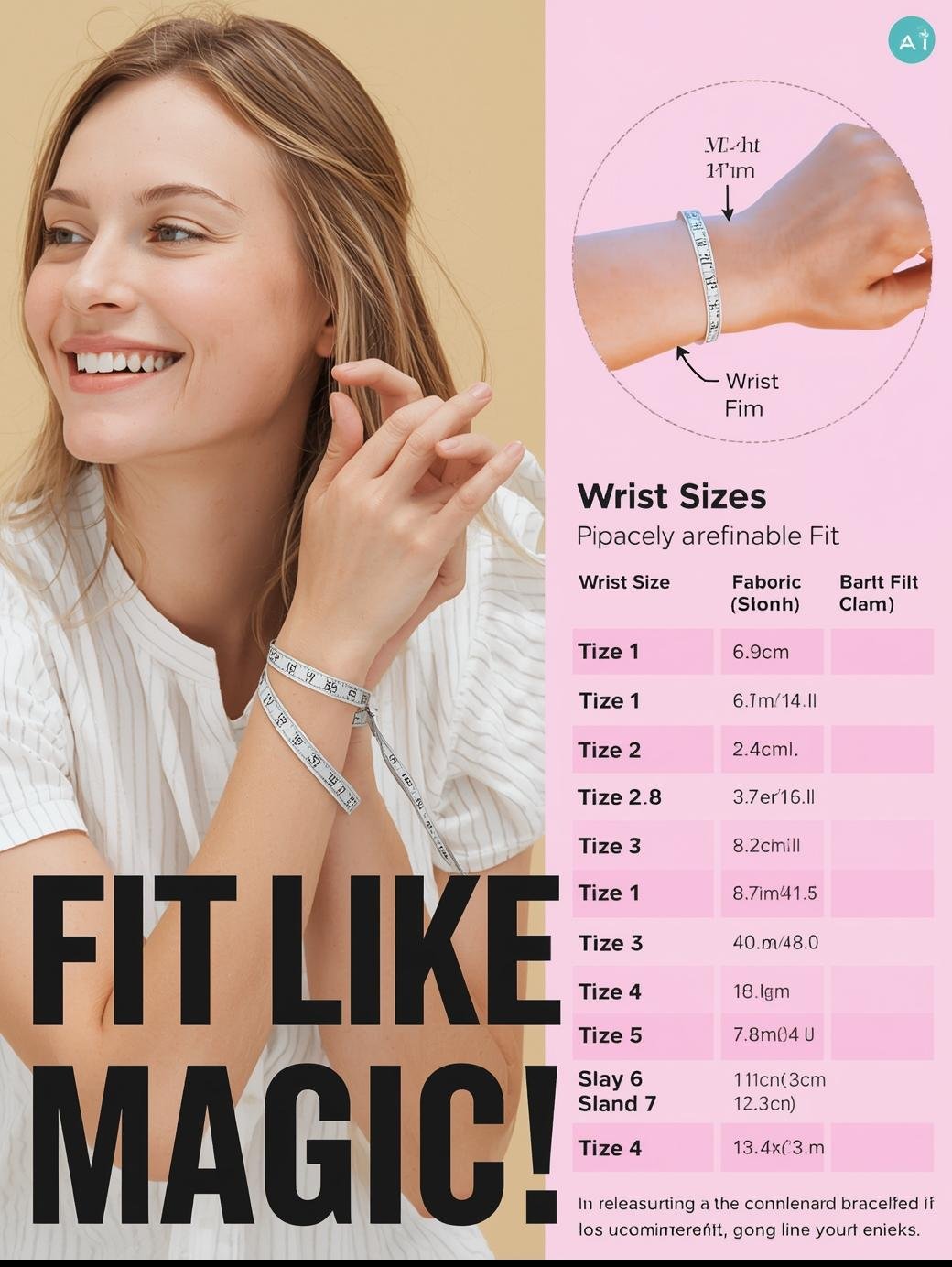
Wrist size also varies by time of day, temperature, and activity. Measure when you’re relaxed, not after exercise or in extreme heat. And if you’re between sizes? Always size up — a snug bracelet can be adjusted; a loose one often can’t.
Wrist Size & Bracelet Fit Guide
| Wrist Size (inches) | Recommended Bracelet Size | Style Best Suited | Add-On Tip |
|---|---|---|---|
| 5.5 – 6.0 | 6.5 – 7.0 | Delicate chains, slim bangles | Add 0.5″ for comfort fit |
| 6.0 – 6.5 | 7.0 – 7.5 | Medium chains, cuff styles | Measure knuckles for bangles |
| 6.5 – 7.0 | 7.5 – 8.0 | Statement cuffs, charm bracelets | Allow room for layering |
| 7.0 – 7.5 | 8.0 – 8.5 | Wide cuffs, beaded designs | Consider adjustable closures |
| 7.5+ | 8.5+ | Stretch or wrap styles | Custom sizing recommended |

Measuring Tips for Different Bracelet Types
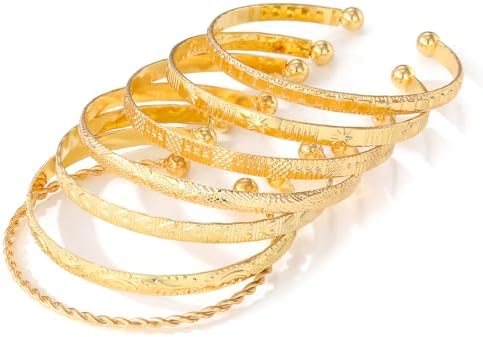
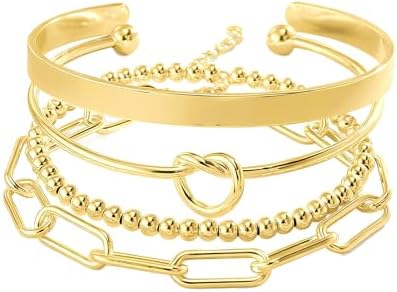
For chain bracelets, measure your wrist bone and add 0.75 inches for a comfortable, slightly loose fit that allows movement. For bangles, measure the widest part of your hand — usually over the knuckles — using a flexible tape or string. For cuffs, measure wrist circumference and subtract 0.25 inches since they’re meant to hug the wrist.
Stretch bracelets should fit snugly but not compress — test by sliding two fingers under the band. If it’s hard to get them in, it’s too tight.
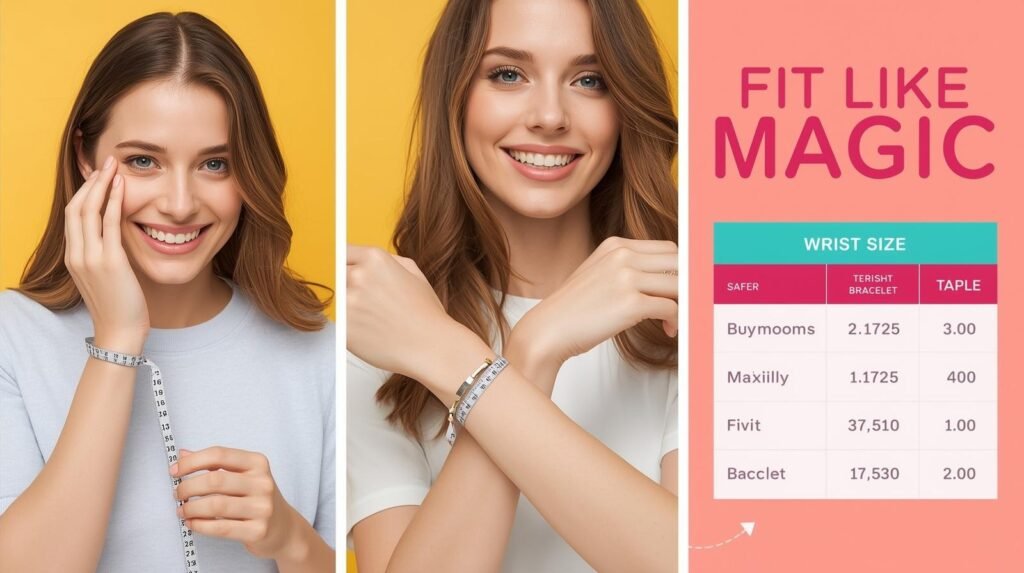
Real-life tip: Use a strip of paper if you don’t have a measuring tape. Wrap it snugly, mark where it overlaps, then measure the length with a ruler. Repeat 2-3 times for accuracy.
Frequently Asked Questions
Q: What if my bracelet doesn’t have an adjustable clasp?
A: Many jewelers offer resizing — especially for solid metal cuffs or chains. For beaded or elastic styles, consider custom orders.
Q: Should I measure my dominant wrist?
A: Usually yes — it’s often slightly larger. But if you wear bracelets on both wrists, measure each separately.
Q: How much extra length should I add for layering?
A: Add 0.5 to 1 inch per additional bracelet to prevent overcrowding and ensure each piece moves freely.
Find your perfect fit with our selection of adjustable, custom-fit, and beautifully crafted bracelets — designed for comfort and style that lasts.


Conclusion
Measuring your wrist isn’t just practical — it’s empowering. With the right tools and tips, you’ll never again settle for ill-fitting bracelets or guess your size. Whether you’re treating yourself or surprising someone special, precision ensures your jewelry feels as good as it looks. Grab a tape measure, find your true size, and embrace bracelets that fit like they were made just for you.